DORO LUCENT
BRIEF
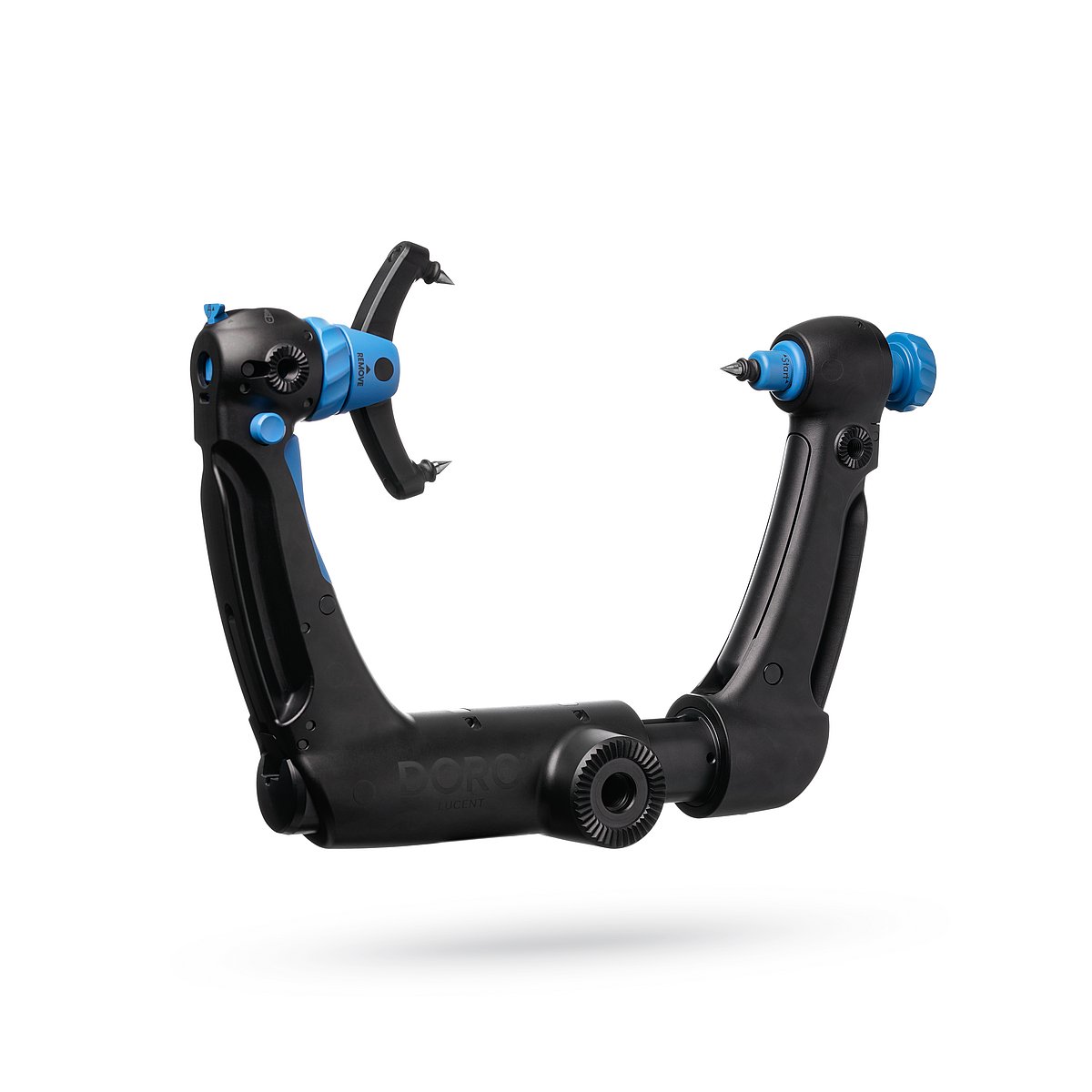
With the Doro Lucent, the BLACK FOREST MEDICAL GROUP (BFMG) set a highly ambitious goal: to develop a skull clamp that is robust, penetrable by radiation, lightweight, and most importantly – can be operated by only one person.
The complexity of this task was not apparent to me at the beginning of my work on the skull clamp. The BFMG had little experience working with a design office before, but they were far-sighted enough to bring us on board at a very early stage of the clamp’s development. So, as part of this project, I was not only responsible for the design, but I was also able to contribute some forward-thinking, ergonomic and functional ideas from the beginning, which were eventually implemented in the final product.
DESIGN PROCESS
The constructors were still unclear on how the individual functions of the clamp could be implemented. The development of the clamp ultimately took almost 3 years and was subject to constant adjustments. Finalized decisions had to be discarded, others were re-addressed. This was not due to the engineers‘ inability, but rather the seemingly insurmountable task that the BFMG had set for them. With an extraordinary will for perfection and an unusual openness to creative ideas, the clamp was ultimately implemented as the company had desired – a skull clamp that is now indispensable in operating rooms around the world.
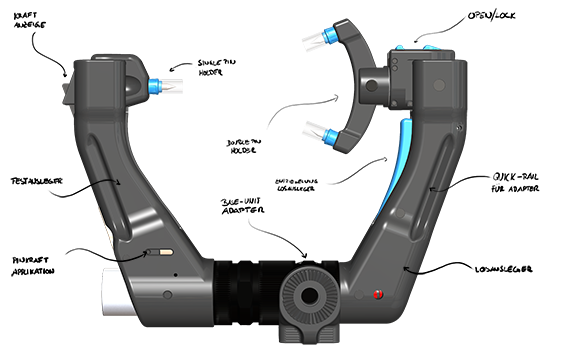
Analysis
Previously, operations required 2-3 people to apply the device to an anesthatized patient’s head. With a new, sophisticated mechanism, it should be possible for a single operator to apply the clamp on their own. For the operation itself, the clamp must accommodate a wide variety of equipment. To be able to monitor the progress of the operation, the patient must be inserted into a CT scan without removing the clamp. For this reason, the clamp must not only be penetrable by radiation, but also, due to its composition, produce minimal artifacts in the X-ray image. The clamp achieves this through its uniform material thicknesses and few edges as possible.
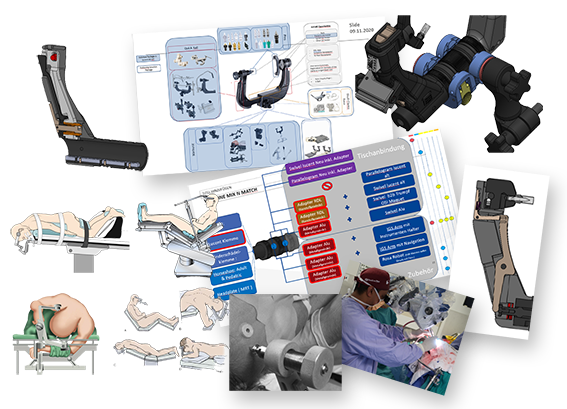
Ideation
Mostly free from the many restrictive requirements for the clamp, a wide variety of different design ideas were generated.
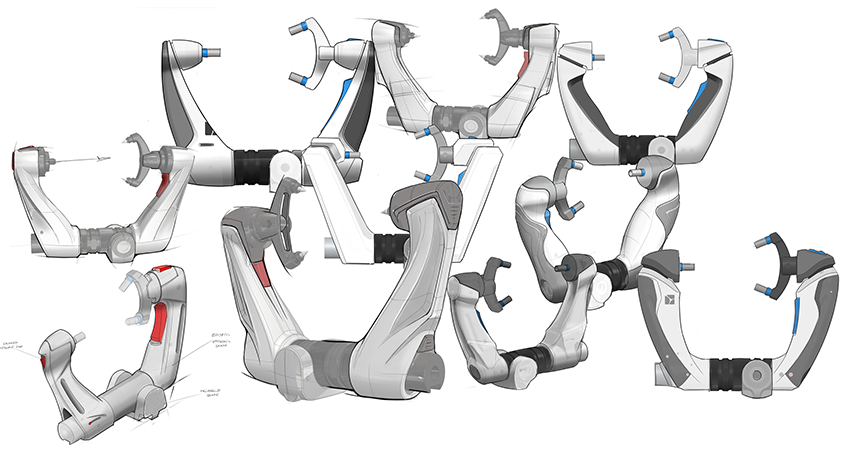
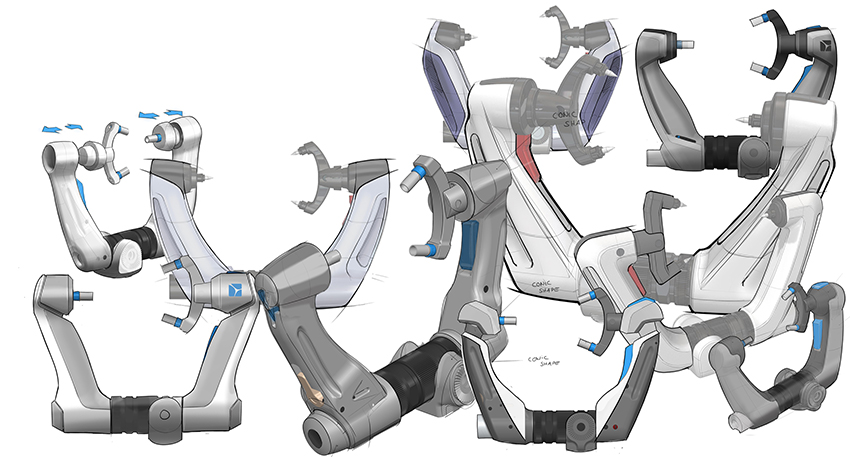
Variation
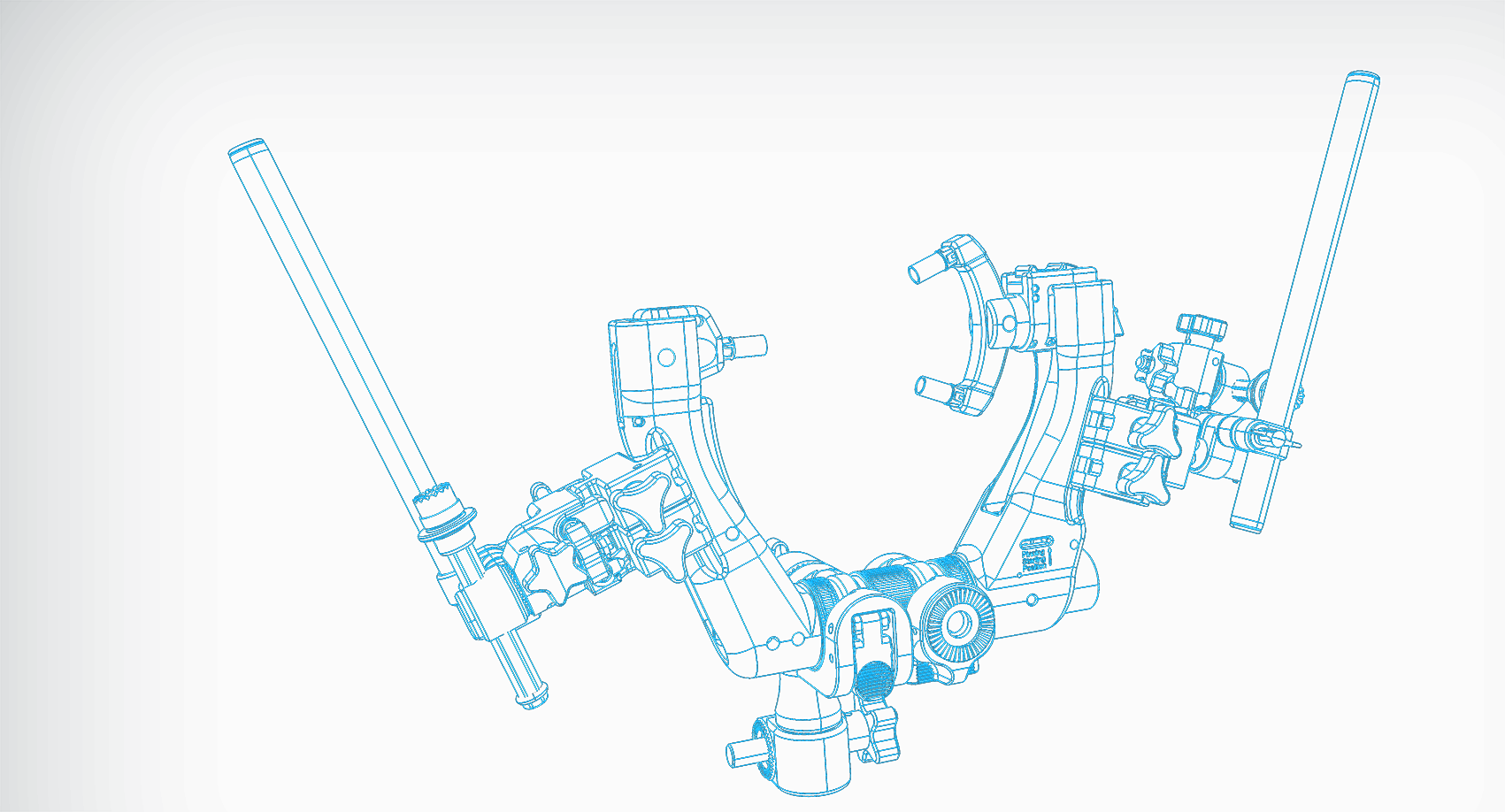
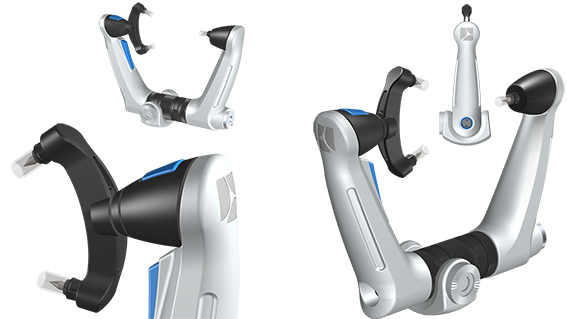
Our favorite ideas were presented to the customer in the form of simple CAD models.
This draft was preferred by all parties and should serve as the basis for all further developments of the skull clamp.
Elaboration
After deciding on a design direction, the individual functional areas of the clamp were further developed and in parts completely rethought. Thus, the design of the clamp also underwent a continuous adaptation process.
Realization
Technical Issues
To enable the use of the clamp by only one person, an ergonomically optimal sequence of actions had to be created first. Following that, the development and implementation of all necessary mechanisms took place. These had to meet the requirements for the mechanical functions, as well as for penetrability and the hygiene, that is indispensable in an operating room.
&
Product Language
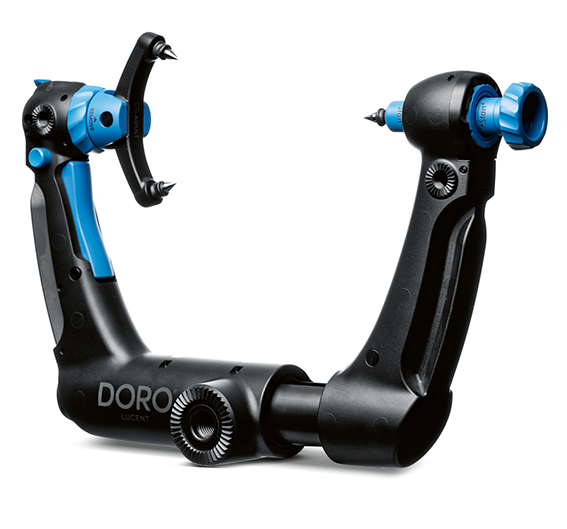
It is essential, that the design of medical technology promotes the functionality of the product and does not hinder it. I designed a clamp that is ergomically shaped, highlights all essential functional areas and is intuitive to operate. Its clear, almost symmetrical contour makes it appear very harmonious and communicates quality and the highest precision.
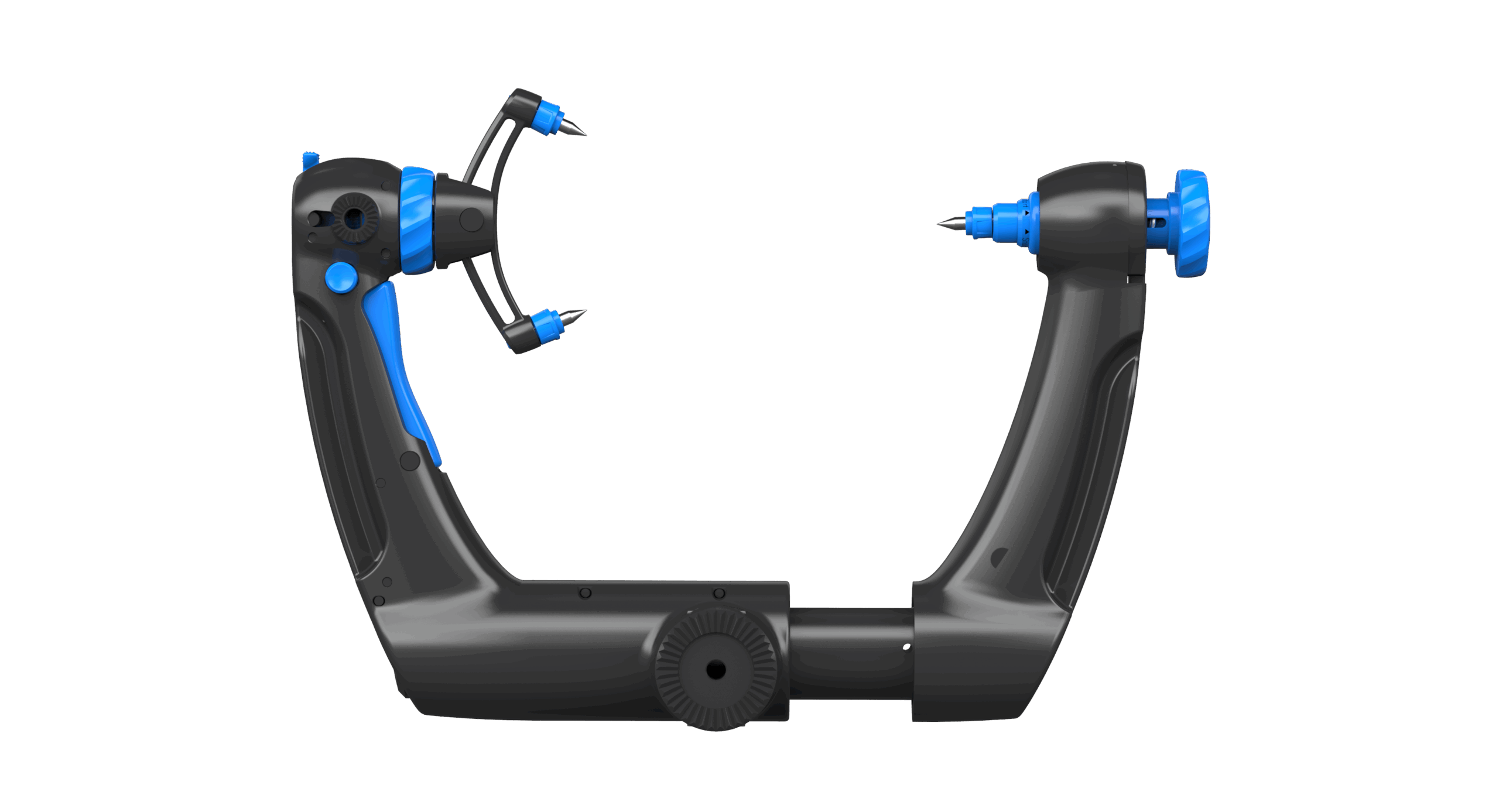
Renderings & CAD
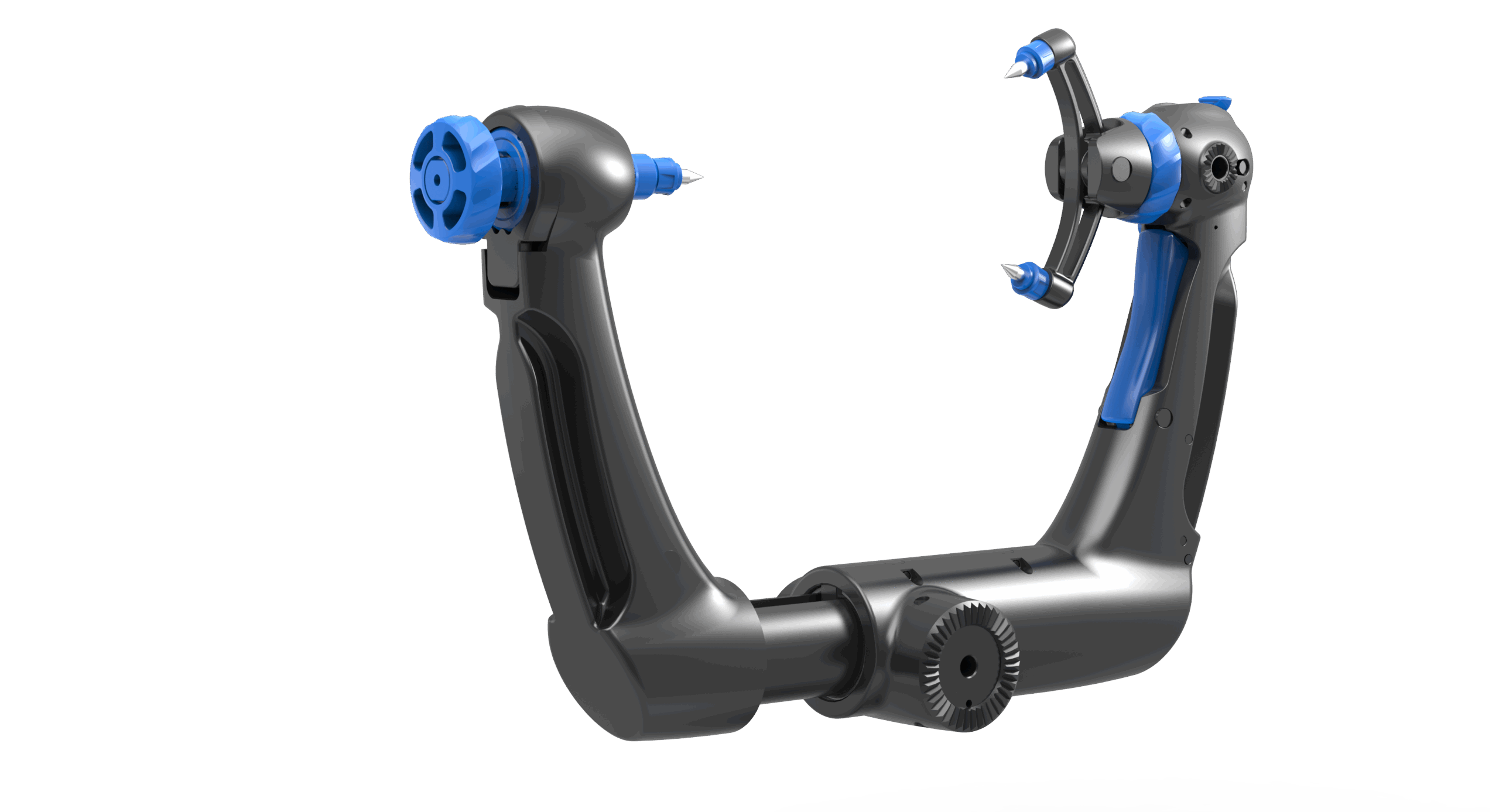
FINAL PRODUCT
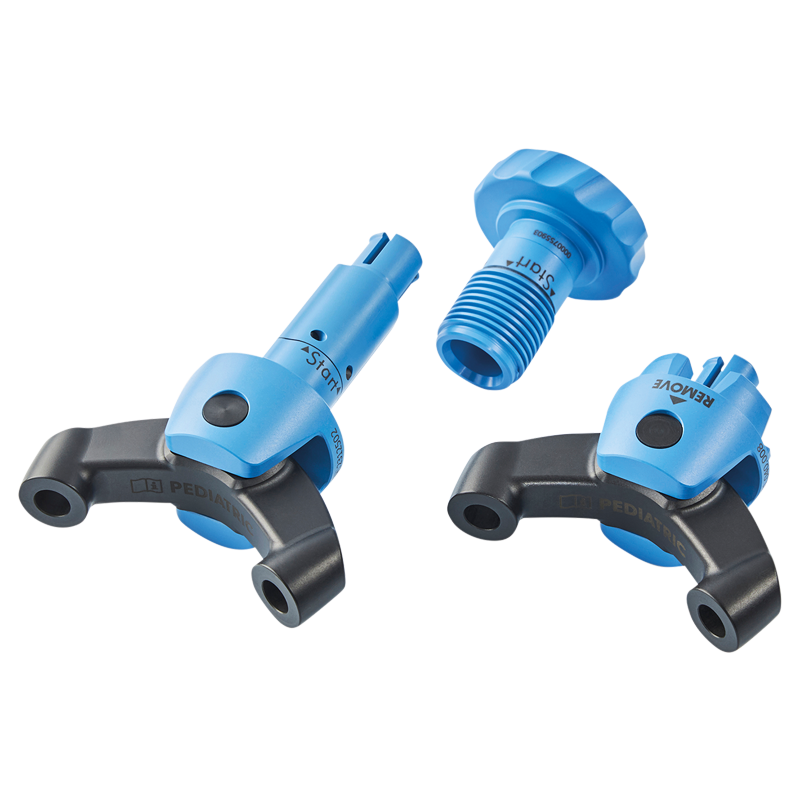
Until the end of the project, BFMG wanted to dye functional areas such as the tension screw, the button for the width adjustment, and the open/lock mechanism in a beige shade that could be acquired at a significantly lower price than blue. Finally, I was able to convince all parties involved, to invest into a blue PEEK, to give the clamp a more valuable and timeless look.